
This gallery highlights books written or edited by current and former Cedarville University faculty members. It does not represent a comprehensive list of books by Cedarville faculty, but rather includes only those which have been brought to the attention of the University Archivist. Please contact the library to suggest additional titles.
-
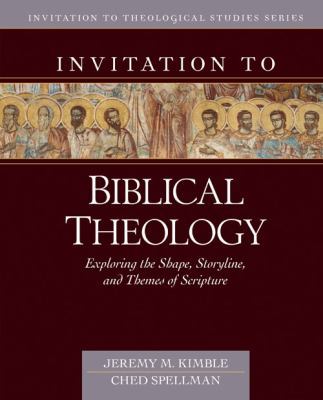
Invitation to Biblical Theology: Exploring the Shape, Storyline, and Themes of the Bible
Jeremy M. Kimble and Ched E. Spellman
Invitation to Biblical Theology provides a thorough overview of biblical theology that is accessible for those new to the topic but substantial enough for advanced study. Defining biblical theology as “the study of the whole Bible on its own terms,” Jeremy Kimble and Ched Spellman begin with a brief history of the discipline followed by a survey of contemporary approaches. They then lay out their own approach, built on the framework of the canon, the covenants, and Christ.
Taking God’s plan of redemption in Christ as the uniting theme of Scripture, Kimble and Spellman survey the grand storyline of the Bible from Genesis to Revelation, showing how each division of the canon moves the overarching story forward. The following ten chapters survey central and recurring themes of Scripture including kingdom, worship, Messiah and atonement, God’s glory, and mission. The authors conclude with reflections on how biblical theology can serve the church as well as the academy.
-
Fruitful Theology: How the Life of the Mind Leads to the Life of the Soul
Ronni Kurtz
Why do the theologians rage?
/="/">
/="/">Even a cursory scrolling of social media may lead you to the conclusion that you have to be angry to do theology. Sadly, our day is characterized by theological fighting—complete with harsh words, exaggeration, biting sarcasm, and the spirit of tearing down our brothers and sisters in Christ. But it does not have to be this way. In fact, it should not be this way.
/="/">
/="/">In Fruitful Theology, Ronni Kurtz swims upstream to counter this prevailing problem. Instead of theology leading to anger, division, and discord, this book shows that the life of the mind can actually lead to the fruit of the Spirit. Fruitful Theology is for anyone who:- Wants to grow in an understanding of Scripture, but is afraid that knowledge will make them arrogant;
- Is confused about the relationship between doctrine and Christian living;
- Is concerned that theological conviction promotes disunity and discord among Christians;
- Desires to grow in Christian maturity, but isn’t sure how theology fits into that desire.
What if our speech and conduct were seasoned more with love, joy, peace, patience, kindness, goodness, faithfulness, gentleness, and self-control? How might the church’s unity be restored, and our witness be maximized, if we were characterized by the fruit of the Spirit instead of the spirit of our age? Theology may not be the most obvious candidate in helping reorient our life towards the fruit of the Spirit, but a right contemplation of God can indeed lead to right living for God, and that is exactly what this book hopes to explore.
-
No Shadow of Turning: Divine Immutability and the Economy of Redemption
Ronni Kurtz
How does God’s unchanging nature impact the salvation of his people?
While divine immutability enjoyed a broad affirmation through much of Christian theological antiquity, it has fallen on harder times in modernity. Seen as a holdover from overly philosophical theology, divine immutability has often been characterized as rendering God static and incapable of having meaningful relationships with his creation.
This book aims to swim upstream from this claim and demonstrate that divine immutability does not handicap soteriology but is a necessary and vital component of God’s economy of redemption as triune changelessness protects and promotes the redemption of God’s creatures. By anchoring the economy of redemption in divine immutability, we see the benefit of rooting all of God’s economic work in the immanent life of God.
This book aims to be a work of dogmatic theology and therefore will arrive at this thesis by way of exegetical, historical, and philosophical theology. In harmony, these fields will interact with varying deviations and denials of divine immutability and ultimately conclude that a classical articulation of God’s changelessness does most justice to the economy of redemption.
-
The Theology of John Smyth: Puritan, Separatist, Baptist, Mennonite
Jason K. Lee
The first English Baptist, John Smyth created controversy with his radical thought and actions. During his writing career of only ten years, Smyth successively produced works of Puritan, Separatist, Baptist, and Mennonite thought. After accepting Mennonite beliefs, Smyth and a majority of his congregation petitioned to join the Waterlander Mennonites in Amsterdam. However, before the union could be achieved, Smyth died of tuberculosis. Under Thomas Helwys’s leadership, the portion of Smyth’s congregation that did not join the Waterlanders returned to England and established the first General Baptist Church. Most studies of Smyth and his successors have approached the material with predominantly historical concerns. While the historical facts about Smyth are important, they should be coupled with his theology, which motivated his actions. Jason K. Lee is the first scholar to investigate Smyth’s theology in this context. First, Lee identifies the historical and theological environment that shaped Smyth’s thought, examining Puritan, Separatist, and Mennonite backgrounds in order. Smyth often found himself isolated from former associates as he continued his pursuit of truth. Second, Lee provides an analysis of Smyth’s theology including his understanding of Scripture, covenant, atonement, Christology, and Church-state relations. This book makes an important contribution to the understanding of both the origins of Baptists and to Christianity in the seventeenth century.
-
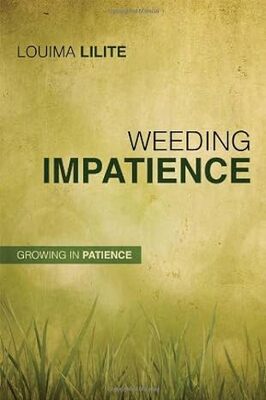
Weeding Impatience: Growing in Patience
Louima Lilite
"Hurry up! We're late!" "I need it now!" "You have to be out the door in five minutes!" "How long do I have to wait, God?" These and dozens of other messages can lead to a frenzied, hurried life. The instant-gratification mindset, combined with a drive to cram as much activity as possible into any given day, has made us an impatient people- with harmful results to relationships, health, work, finances, and even our walk with God. If you're tired of the frantic pace that often wears you out, you've picked up the right book-Weeding Impatience is a thorough biblical approach to getting your life in order by learning to be more patient in all things. Presented in a compelling and thoughtful manner that includes true-life stories and examples, Weeding Impatience will start you on the very rewarding journey toward a lifestyle of quiet surrender to God-and big improvements for you and your family as you learn to reset and experience the peace that comes with patience.
-
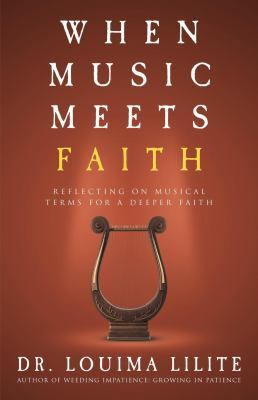
When Music Meets Faith: Reflecting on Musical Terms for a Deeper Faith
Louima Lilite
Music is powerful-it can bring people to tears, to laughter, to quiet reflection, and to boisterous dancing. In When Music Meets Faith, Dr. Louima Lilite uses musical terms and symbols to shed new light on the believer's journey toward and with Christ. This book is equally relevant to someone with years of musical training under his or her belt as it is to someone with no musical background whatsoever. The explanations, stories, and imagery will bring to life the power of music and the wisdom that can be drawn from it. If you are looking for a refreshing devotional that will help you integrate your faith into all areas of your life, "When Music Meets Faith" is the devotional that will help you do so.
-
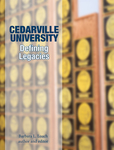
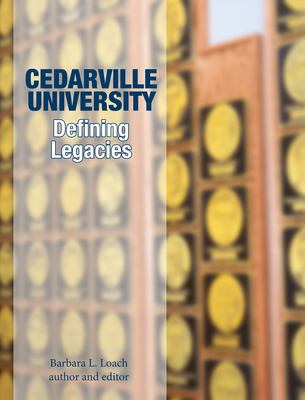
Cedarville University: Defining Legacies
Barbara L. Loach
Cedarville University’s 125th anniversary in 2012 provided an appropriate moment to look back and remember how God has led so many wonderful people to this place and how His hand has guided and kept us over all these years. As the university continues to grow and change, many individuals new to the campus—students, administrators, faculty and staff members alike—may not be aware of all the contributions of those who preceded them. In order to capture those lives before they are lost to history, Dr. Loach set out to record the stories behind some of the faces and names long associated with the university. In addition, she highlights how some of the university's more than 30,000 alumni have served the Lord through various fields of endeavor around the world.