
This gallery highlights books written or edited by current and former Cedarville University faculty members. It does not represent a comprehensive list of books by Cedarville faculty, but rather includes only those which have been brought to the attention of the University Archivist. Please contact the library to suggest additional titles.
-
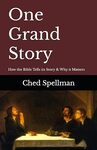
One Grand Story: How the Bible Tells its Story and Why It Matters
Ched E. Spellman
This is a little book about the "big picture" of the Bible.
/="/">As a primer on the discipline of biblical theology, it examines the Bible's message as a whole alongside some of the most important tools that help us discern and display this richly rewarding truth. It includes a framework for biblical theology, an introduction to specific reading strategies, and also a series of biblical-theological reflections on key biblical themes.
/="/">
/="/">In the final part of the book, there is an annotated list of books for further reading, a series of topics for further research in the academic discipline of biblical theology, and a brief glossary of key terms. These final features of the book are designed for it to function well as a supplementary textbook in an academic course in biblical or theological studies. At the end of each chapter, there are also reflection prompts and discussion questions. This resource is designed to facilitate small group discussion (either in a church or a classroom setting).
/="/">
/="/">In the end, the big idea of this little book is that biblical theology will help you navigate the world of the biblical text, and it will also help you locate yourself in the biblical text’s world.
-
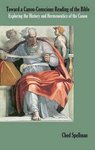
Toward a Canon-Conscious Reading of the Bible: Exploring the History and Hermeneutics of the Canon
Ched E. Spellman
Two distinct questions about the canon of the Bible can be raised: (1) How did the biblical canon come to be?, and (2) What effect does that canon have on its readers? The former is a historical question about the formation of the biblical canon; the latter is a hermeneutical question about the function of the biblical canon. Though these questions have often been pursued in virtual isolation from one another, Spellman argues that there are considerable gains from observing the interconnections between the two lines of inquiry. On the historical question of the origin of the canon, Spellman asks, Is the shape of this collection an accident of history or a result of intelligent design? He concludes that canon-consciousness played an important role in the formation of the canon, even impinging on the work of the biblical authors themselves. On the hermeneutical question, the communities of readers of the Bible may also be shown to have been directed by their own canon-consciousness, using it as a guide in their interpretative task. In this interdisciplinary work, Spellman marshals historical, theological and hermeneutical resources in order to paint a picture of how the concept of canon can enrich reading communities of today.
-
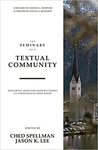
The Seminary as a Textual Community: Exploring John Sailhamer's Vision for Theological Education
Ched E. Spellman and Jason K. Lee
John Sailhamer (1946-2017) is known for his careful scholarship on the Hebrew Bible and his focus on the compositional strategies found in the text of Scripture. Perhaps less well-known is his comprehensive vision for theological education.
In part one of this volume, editors Ched Spellman and Jason K. Lee present a previously unpublished address from Sailhamer on "The Nature, Purpose, and Tasks of a Theological Seminary" and offer a reflection on the setting, substance, and significance of this new work. Part two includes a collection of Sailhamer's articles, essays, and reviews that are less-well known yet relate to some of the major topics he develops in his proposal for theological education. These writings focus on the use of history and hermeneutics with an eye toward the nature of biblical narratives. This section also includes some of Sailhamer's interaction with works from several different disciplines (from biblical exegesis to systematic theology) as well as his reflections on the state of Old Testament studies. The volume ends with a comprehensive bibliography of Sailhamer's writings and research.
-
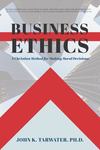
Business Ethics: A Christian Method for Making Moral Decisions
John Tarwater
Regardless of one’s function in the marketplace (consumer, producer, CEO, etc.), one is confronted by an ever-expanding world of moral questions. How does one make moral decisions in this changing environment? In his Business Ethics: A Christian Method for Making Moral Decisions, John Tarwater provides the reader with the fundamental tools necessary for making business decisions that honor God. In contrast to secular texts in business ethics that focus on changing ideas of corporate citizenship or stakeholder relationships, Tarwater emphasizes Scripture’s fixed understanding of one’s conduct, one’s heart, and one’s purpose when making moral decisions. In addition to exploring the interconnectedness of these three historic elements of morality, Tarwater links them to contemporary issues in the business world. By focusing on the method for making moral decisions and not just the consequences resulting from them, Tarwater illustrates how Scriptural principles assist readers with perennial concerns that undergird ethical dilemmas in every era.
-
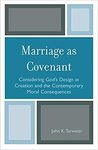
Marriage as Covenant: Considering God's Design at Creation and the Contemporary Moral Consequences
John Tarwater
Marriage as Covenant examines the nature and meaning of marriage as an order of creation. The book questions whether or not there is evidence in Genesis for believing God made marriage to be a covenant relationship; and if so, how does it affect the way one understands moral boundaries surrounding marriage? The book also questions what did God expect of Adam with respect to Eve, and what did he expect of Eve in relation to Adam?
-
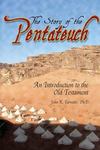
The Story of the Pentateuch: An Introduction to the Old Testament
John Tarwater
The vast amounts of information—people, places, legal codes—in the Old Testament often overwhelm new students of the Bible causing many to cease reading it regularly and to surrender understanding fully its message. In The Story of the Pentateuch, Tarwater not only explains in detail the diverse parts of the Pentateuch, but more importantly how these components work in concert to communicate a unified story. Through the pages of The Story of the Pentateuch, therefore, the student of the Bible learns to read and to recognize the main story and distinguish it from the supporting narratives and legal codes.
/="/">
/="/">In addition to laying a foundation for reading and understanding the Pentateuch, Tarwater explains how properly understanding these initial books of the Bible provides the requisite background for comprehending the rest of the Old and New Testament, as well as for recognizing the character of God. Rather than a survey to Old Testament methodologies and archaeological discoveries, The Story of the Pentateuch represents a fresh introduction to the Old Testament. -
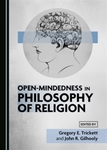
Open-mindedness in Philosophy of Religion
Gregory E. Trickett and John R. Gilhooly
In a free society, it is common to hear the request that one ‘keep an open mind.’ Just what exactly is it, however, to keep an open-mind? How does open-mindedness function? How does it square with important personal commitments? These issues are particularly acute when it comes to matters of religious belief in which open-mindedness can sound to the pious a bit too much like doubt. Certainly, in a discipline whose discourse remains rational dialogue, effort should be spent discerning the contours of this virtue, especially in light of its formal role in establishing responsiveness to new inquiries in matters philosophical and religious. This book provides a collection of essays serving to promote conversation about open-mindedness, its virtue (or lack thereof), and its role and application in problems in the philosophy of religion in particular.
-
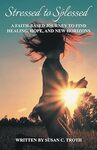
Stressed to Splessed: A faith-based journey to find healing, hope, and new horizons
Susan Troth
Are you in the beginning stages of grief, the messy middle, or at the end of a long painful season of being overwhelmed and stressed? I’ve been there and I can lead you to the other side. Open these pages, take a breath, and embark on a beautiful transformation from being held down and stressed, to living victoriously and splessed.
In this book I walk you through a process of:
- A sacred place where healing is possible.
- An invitation where hope is restored.
- A path forward where you discover new horizons.