This gallery highlights books written or edited by current and former Cedarville University faculty members. It does not represent a comprehensive list of books by Cedarville faculty, but rather includes only those which have been brought to the attention of the University Archivist. Please contact the library to suggest additional titles.
-
The Story of the Pentateuch: An Introduction to the Old Testament
John Tarwater
The vast amounts of information—people, places, legal codes—in the Old Testament often overwhelm new students of the Bible causing many to cease reading it regularly and to surrender understanding fully its message. In The Story of the Pentateuch, Tarwater not only explains in detail the diverse parts of the Pentateuch, but more importantly how these components work in concert to communicate a unified story. Through the pages of The Story of the Pentateuch, therefore, the student of the Bible learns to read and to recognize the main story and distinguish it from the supporting narratives and legal codes.
In addition to laying a foundation for reading and understanding the Pentateuch, Tarwater explains how properly understanding these initial books of the Bible provides the requisite background for comprehending the rest of the Old and New Testament, as well as for recognizing the character of God. Rather than a survey to Old Testament methodologies and archaeological discoveries, The Story of the Pentateuch represents a fresh introduction to the Old Testament. -
Open-mindedness in Philosophy of Religion
Gregory E. Trickett and John R. Gilhooly
In a free society, it is common to hear the request that one ‘keep an open mind.’ Just what exactly is it, however, to keep an open-mind? How does open-mindedness function? How does it square with important personal commitments? These issues are particularly acute when it comes to matters of religious belief in which open-mindedness can sound to the pious a bit too much like doubt. Certainly, in a discipline whose discourse remains rational dialogue, effort should be spent discerning the contours of this virtue, especially in light of its formal role in establishing responsiveness to new inquiries in matters philosophical and religious. This book provides a collection of essays serving to promote conversation about open-mindedness, its virtue (or lack thereof), and its role and application in problems in the philosophy of religion in particular.
-

Stressed to Splessed: A faith-based journey to find healing, hope, and new horizons
Susan Troth
Are you in the beginning stages of grief, the messy middle, or at the end of a long painful season of being overwhelmed and stressed? I’ve been there and I can lead you to the other side. Open these pages, take a breath, and embark on a beautiful transformation from being held down and stressed, to living victoriously and splessed.
In this book I walk you through a process of:
- A sacred place where healing is possible.
- An invitation where hope is restored.
- A path forward where you discover new horizons.
-
Proteomic Applications in Cancer Detection and Discovery
Timothy D. Veenstra
Proteomic data is increasingly important to understanding the origin and progression of cancer; however, most oncologic researchers who depend on proteomics for their studies do not collect the data themselves. As a result, there is a knowledge gap between scientists, who devise proteomic techniques and collect the data, and the oncologic researchers, who are expected to interpret and apply proteomic data. Bridging the gap between proteomics and oncology research, this book explains how proteomic technology can be used to address some of the most important questions in cancer research.
Proteomic Applications in Cancer Detection and Discovery enables readers to understand how proteomic data is acquired and analyzed and how it is interpreted. Author Timothy Veenstra has filled the book with examples—many based on his own firsthand research experience—that clearly demonstrate the application of proteomic technology in oncology research, including the discovery of novel biomarkers for different types of cancers.
The book begins with a brief introduction to systems biology, explaining why cancer is a systems biology disease. Next, it covers such topics as:
- Mass spectrometry in cancer research
- Application of proteomics to global phosphorylation analysis
- Search for biomarkers in biofluids
- Rise and fall of proteomic patterns for cancer diagnostics
- Emergence of protein arrays
- Role of proteomics in personalized medicine
The final chapter is dedicated to the future prospects of proteomics in cancer research.
By guiding readers through the latest proteomic technologies and their applications in cancer research, Proteomic Applications in Cancer Detection and Discovery enhances the ability of researchers in proteomics and researchers in oncology to collaborate in order to better understand cancer and develop strategies to prevent and treat it.
-
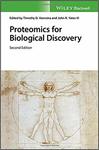
Proteomics for Biological Discovery, 2nd edition
Timothy D. Veenstra and John R. Yates III
Building on the strength of the original edition, this book presents the state of the art in the field of proteomics and offers students and scientists new tools and techniques to advance their own research. Written by leading experts in the field, it provides readers with an understanding of new and emerging directions for proteomics research and applications.
Proteomics for Biological Discovery begins by discussing the emergence of proteomics technologies and summarizing the potential insights to be gained from proteome-level research. The tools of proteomics, from conventional to novel techniques, are thoroughly covered, from underlying concepts to limitations and future directions. Later chapters provide an overview of the current developments in post-translational modification studies, structural proteomics, biochemical proteomics, applied proteomics, and bioinformatics relevant to proteomics. Chapters cover: Quantitative Proteomics for Differential Protein Expression Profiling; Protein Microarrays; Protein Biomarker Discovery; Biomarker Discovery using Mass Spectrometry Imaging; Protein-Protein Interactions; Mass Spectrometry Of Intact Protein Complexes; Crosslinking Applications in Structural Proteomics; Functional Proteomics; High Resolution Interrogation of Biological Systems via Mass Cytometry; Characterization of Drug-Protein Interactions by Chemoproteomics; Phosphorylation; Large-Scale Phosphoproteomics; and Probing Glycoforms of Individual Proteins Using Antibody-Lectin Sandwich Arrays.
- Presents a comprehensive and coherent review of the major issues in proteomic technology development, bioinformatics, strategic approaches, and applications
- Chapters offer a rigorous overview with summary of limitations, emerging approaches, questions, and realistic future industry and basic science applications
- Features new coverage of mass spectrometry for high throughput proteomic measurements, and novel quantitation strategies such as spectral counting and stable isotope labeling
- Discusses higher level integrative aspects, including technical challenges and applications for drug discovery
- Offers new chapters on biomarker discovery, global phosphorylation analysis, proteomic profiling using antibodies, and single cell mass spectrometry
Proteomics for Biological Discovery is an excellent advanced resource for graduate students, postdoctoral fellows, and scientists across all the major fields of biomedical science.
-
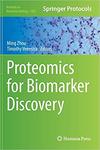
Proteomics for Biomarker Discovery
Timothy D. Veenstra and Ming Zhou
With the advent of proteomics came the development of technologies, primarily mass spectrometry, which allowed high-throughput identification of proteins in complex mixtures. While the mass spectrometer resides at the heart of proteomics, its ability to characterize biological samples is only as good as the sample preparation and data analysis tools used in any study. In Proteomics for Biomarker Discovery, expert researchers in the field detail many of the methods which are now commonly used to study proteomics. These include methods and techniques include both label-free approaches and those that utilize stable isotopes incorporated both during cell growth or added via a chemical reaction once the proteome is extracted from the cell. Written in the highly successful Methods in Molecular Biology™ series format, chapters include introductions to their respective topics, lists of the necessary materials and reagents, step-by-step, readily reproducible laboratory protocols, and key tips on troubleshooting and avoiding known pitfalls.
-
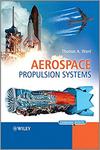
Aerospace Propulsion Systems
Thomas Ward
Aerospace Propulsion Systems is a unique book focusing on each type of propulsion system commonly used in aerospace vehicles today: rockets, piston aero engines, gas turbine engines, ramjets, and scramjets. Dr. Thomas A. Ward introduces each system in detail, imparting an understanding of basic engineering principles, describing key functionality mechanisms used in past and modern designs, and provides guidelines for student design projects. With a balance of theory, fundamental performance analysis, and design, the book is specifically targeted to students or professionals who are new to the field and is arranged in an intuitive, systematic format to enhance learning.
- Covers all engine types, including piston aero engines
- Design principles presented in historical order for progressive understanding
- Focuses on major elements to avoid overwhelming or confusing readers
- Presents example systems from the US, the UK, Germany, Russia, Europe, China, Japan, and India
- Richly illustrated with detailed photographs
- Cartoon panels present the subject in an interesting, easy-to-understand way
- Contains carefully constructed problems (with a solution manual available to the educator)
- Lecture slides and additional problem sets for instructor use
Advanced undergraduate students, graduate students and engineering professionals new to the area of propulsion will find Aerospace Propulsion Systems a highly accessible guide to grasping the key essentials. Field experts will also find that the book is a very useful resource for explaining propulsion issues or technology to engineers, technicians, businessmen, or policy makers. Post-graduates involved in multi-disciplinary research or anybody interested in learning more about spacecraft, aircraft, or engineering would find this book to be a helpful reference.