
-
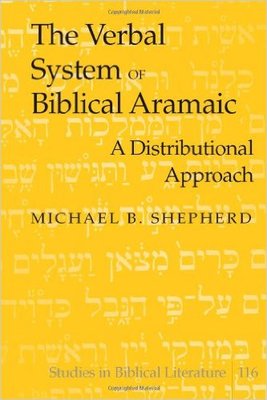
The Verbal System of Biblical Aramaic: A Distributional Approach
Michael B. Shepherd
Grammarians have been unable to provide a sufficient explanation for the verbal system of Biblical Aramaic by means of the standard categories of tense and aspect. Michael B. Shepherd exposes this situation and suggests a way out of the present impasse through distributional analysis by proposing that Biblical Aramaic has a primary verbal form for narration and a primary verbal form for discourse. This simple yet comprehensive proposal holds true not only for Biblical Aramaic but also for extra-Biblical Aramaic texts. This volume is an indispensable resource for courses in Biblical Aramaic and for anyone who wishes to read and understand the Biblical Aramaic corpus.
-
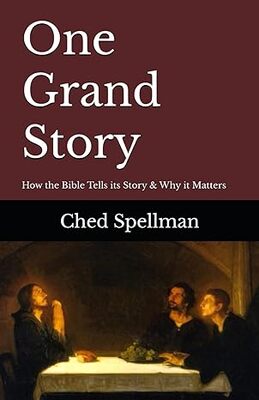
One Grand Story: How the Bible Tells its Story and Why It Matters
Ched E. Spellman
This is a little book about the "big picture" of the Bible.
As a primer on the discipline of biblical theology, it examines the Bible's message as a whole alongside some of the most important tools that help us discern and display this richly rewarding truth. It includes a framework for biblical theology, an introduction to specific reading strategies, and also a series of biblical-theological reflections on key biblical themes.
In the final part of the book, there is an annotated list of books for further reading, a series of topics for further research in the academic discipline of biblical theology, and a brief glossary of key terms. These final features of the book are designed for it to function well as a supplementary textbook in an academic course in biblical or theological studies. At the end of each chapter, there are also reflection prompts and discussion questions. This resource is designed to facilitate small group discussion (either in a church or a classroom setting).In the end, the big idea of this little book is that biblical theology will help you navigate the world of the biblical text, and it will also help you locate yourself in the biblical text’s world.
-
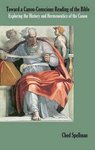
Toward a Canon-Conscious Reading of the Bible: Exploring the History and Hermeneutics of the Canon
Ched E. Spellman
Two distinct questions about the canon of the Bible can be raised: (1) How did the biblical canon come to be?, and (2) What effect does that canon have on its readers? The former is a historical question about the formation of the biblical canon; the latter is a hermeneutical question about the function of the biblical canon. Though these questions have often been pursued in virtual isolation from one another, Spellman argues that there are considerable gains from observing the interconnections between the two lines of inquiry. On the historical question of the origin of the canon, Spellman asks, Is the shape of this collection an accident of history or a result of intelligent design? He concludes that canon-consciousness played an important role in the formation of the canon, even impinging on the work of the biblical authors themselves. On the hermeneutical question, the communities of readers of the Bible may also be shown to have been directed by their own canon-consciousness, using it as a guide in their interpretative task. In this interdisciplinary work, Spellman marshals historical, theological and hermeneutical resources in order to paint a picture of how the concept of canon can enrich reading communities of today.
-
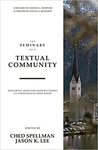
The Seminary as a Textual Community: Exploring John Sailhamer's Vision for Theological Education
Ched E. Spellman and Jason K. Lee
John Sailhamer (1946-2017) is known for his careful scholarship on the Hebrew Bible and his focus on the compositional strategies found in the text of Scripture. Perhaps less well-known is his comprehensive vision for theological education.
In part one of this volume, editors Ched Spellman and Jason K. Lee present a previously unpublished address from Sailhamer on "The Nature, Purpose, and Tasks of a Theological Seminary" and offer a reflection on the setting, substance, and significance of this new work. Part two includes a collection of Sailhamer's articles, essays, and reviews that are less-well known yet relate to some of the major topics he develops in his proposal for theological education. These writings focus on the use of history and hermeneutics with an eye toward the nature of biblical narratives. This section also includes some of Sailhamer's interaction with works from several different disciplines (from biblical exegesis to systematic theology) as well as his reflections on the state of Old Testament studies. The volume ends with a comprehensive bibliography of Sailhamer's writings and research.
-
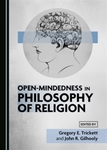
Open-mindedness in Philosophy of Religion
Gregory E. Trickett and John R. Gilhooly
In a free society, it is common to hear the request that one ‘keep an open mind.’ Just what exactly is it, however, to keep an open-mind? How does open-mindedness function? How does it square with important personal commitments? These issues are particularly acute when it comes to matters of religious belief in which open-mindedness can sound to the pious a bit too much like doubt. Certainly, in a discipline whose discourse remains rational dialogue, effort should be spent discerning the contours of this virtue, especially in light of its formal role in establishing responsiveness to new inquiries in matters philosophical and religious. This book provides a collection of essays serving to promote conversation about open-mindedness, its virtue (or lack thereof), and its role and application in problems in the philosophy of religion in particular.
-
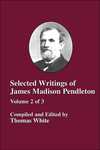
Selected Writings of James Madison Pendleton
Thomas White
James Madison Pendleton, Amos Cooper Dayton, and James Robinson Graves were known as "The Great Triumvirate" of the Landmark movement. His "An Old Landmark Reset" is considered a foundational document of this movement within the Southern Baptist Convention. (3 volume set)
-
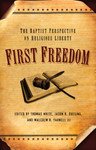
First Freedom: The Baptist Perspective on Religious Liberty
Thomas White, Jason G. Duesing, and Malcolm B. Yarnell
First Freedom is an important gathering of messages from a recent conference on religious liberty held at Southwestern Baptist Theological Seminary. Editor Jason B. Duesing explains:
"The purpose of this collection is, first, to provide an introductory look into the biblical and historical foundations of religious liberty combined with several instances of contemporary expression and defense for the purpose of instruction, edification, and encouragement to all who take the time to read this volume. Second, however, we wish to remind Baptists in the twenty-first century of the price that was paid by their forefathers for the establishment and defense of religious liberty. To be sure, there were people of various religious and denominational preferences that providence used to implement the religious freedoms now enjoyed by all, but for Baptists to overlook the contribution of their own would be a travesty."
-
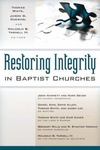
Restoring Integrity in Baptist Churches
Thomas White, Jason G. Duesing, and Malcolm B. Yarnell
A compilation of articles seeking to answer the question, "How does the local church - which is often influenced by a consumer-driven, numbers-oriented society - restore integrity and establish purpose?" The articles written by Dr. White are the introduction, "What Makes Baptism Valid?", and "A Baptist's Theology of the Lord's Supper".